
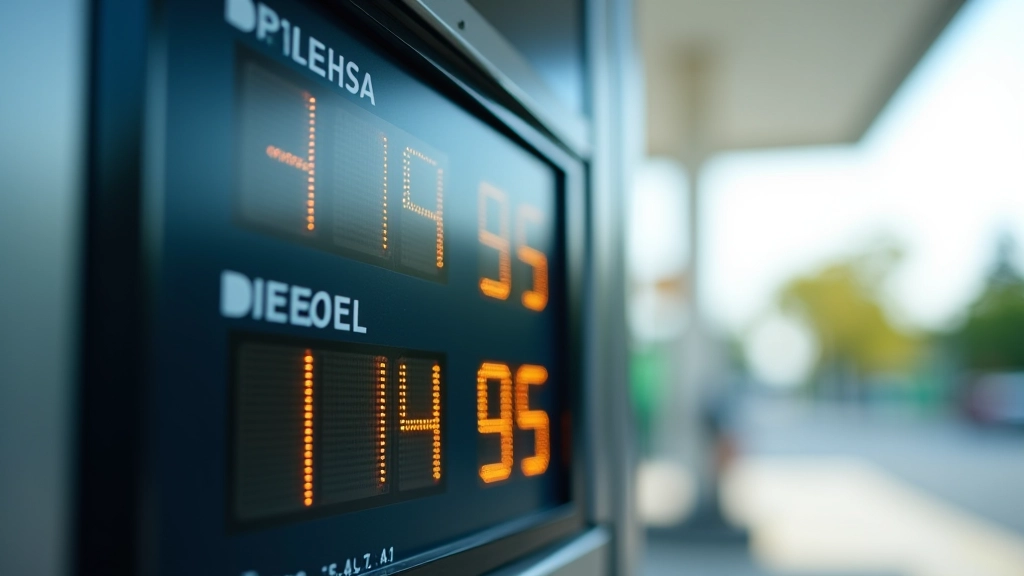
How RON95 and Diesel Prices Are Set
Explore the administered price system that determines fuel costs each week and why prices change on Wednesdays.
Read MoreUnderstanding the direct relationship between global crude oil costs and Malaysian fuel prices at the pump each week.

Every time you fill up at the petrol station, you’re paying a price that’s directly tied to what crude oil costs on global markets. It’s not magic — it’s mechanics. The oil pumped from fields thousands of kilometers away impacts the RM you spend at the pump in Malaysia, and understanding this connection helps you see why fuel prices change week to week.
The administered price system means Malaysia’s government manages fuel pricing through a structured formula. But that formula isn’t arbitrary. It’s built on real numbers: the cost of crude oil, refining expenses, distribution, and taxes. When you understand how these pieces fit together, sudden price jumps don’t feel so random anymore.
Here’s the thing: crude oil is traded on global markets. Brent crude and West Texas Intermediate (WTI) are the main benchmarks. When these prices move, they ripple outward. Malaysia imports most of its refined fuel, so when crude gets expensive globally, it costs more to buy refined petrol and diesel for local consumption.
The administered price system translates these global movements into local pump prices. Every week, the government reviews crude oil costs, refining margins, and other factors. If Brent crude jumped from USD 75 to USD 85 per barrel, you’d likely see that reflected at Malaysian petrol stations within days. The lag isn’t long — the system’s designed to move with market conditions pretty quickly.
But here’s where it gets interesting: the government also builds in stabilization mechanisms. They don’t pass 100% of global price swings directly to consumers. Instead, they use a formula that considers average prices over a period, smoothing out daily volatility. This means your local price won’t spike wildly every single day even if global markets are chaotic.

Global crude oil prices rise USD 10 per barrel due to supply concerns or geopolitical events.
Refineries adjust their margins. Costs to process crude into usable fuel increase proportionally.
Malaysia’s energy ministry reviews pricing data. The administered formula gets recalculated with new inputs.
RON95 and diesel prices adjust at petrol stations. You’ll see the new price the next pricing cycle.

When crude oil prices jump, it doesn’t just affect what you pay at the petrol station. It creates a domino effect. Logistics companies pay more for fuel. They pass those costs to shipping. Your groceries, packages, clothes — anything delivered — costs a bit more because the truck that carried it burned expensive fuel.
This is why economists watch crude oil prices closely. A sustained rise in crude oil (say, staying above USD 100 per barrel for months) means inflation pressures throughout the economy. Goods become more expensive. Your purchasing power weakens. But it’s not immediate — there’s usually a lag of a few weeks before you see price increases in shops because businesses have existing inventory they’re selling at the old prices.
The reverse is true too. When crude oil falls — like during the 2020 pandemic shock — prices eventually drop at the pump and in shops. You’re paying less because fuel costs less. It’s a chain reaction, and understanding it helps you anticipate broader economic shifts.
Crude oil prices aren’t set by any single country or company. They’re determined by global supply and demand, filtered through futures markets and trading platforms. Here’s what actually moves the needle:
When major producers reduce output — whether due to maintenance, conflict, or policy — crude becomes scarcer. Prices rise quickly because demand doesn’t drop proportionally. OPEC decisions have massive influence here.
When global economies boom, factories run more, transportation increases, flying increases. All of that burns fuel. Stronger growth = higher oil demand = higher prices.
Oil is traded in US dollars. When the dollar strengthens, oil becomes more expensive for other countries. That can reduce demand, putting downward pressure on prices.
Wars, sanctions, political instability in oil-producing regions create uncertainty. Markets hate uncertainty. Prices jump preemptively because traders worry about future supply.
You can’t control global crude oil prices. But you can understand them. When you see news about OPEC meetings or Middle East tensions, you know that’s crude oil volatility brewing. When economists talk about stagflation or recession risks, part of that conversation is about energy costs.
In Malaysia specifically, the administered price system actually protects you from the wildest swings. It’s not perfect — prices do go up — but it’s smoother than what consumers in other countries experience. If you’re curious about upcoming price changes, watch the crude oil benchmarks (Brent is the most relevant for Malaysia). They’re publicly tracked. You’ll spot trends before they hit local petrol stations.
“Understanding crude oil pricing isn’t about predicting the future. It’s about seeing why things happen the way they do. Once you understand the mechanism, sudden fuel price changes make sense.”
The bigger picture: fuel prices are one window into global economics. They affect inflation, transportation costs, and ultimately your cost of living. Being aware of how they work — how they’re connected to what happens on global oil markets — is practical knowledge that helps you make smarter financial decisions.

This article provides educational information about crude oil pricing mechanisms and their relationship to Malaysian fuel costs. It’s designed to help you understand how global energy markets function and affect local pricing. The content is informational only and doesn’t constitute financial, investment, or economic advice. Crude oil prices, global economic conditions, and government policies change frequently. For current fuel prices, official government resources and energy ministry announcements are your most reliable sources. If you’re making financial decisions based on energy cost projections, consider consulting with a financial advisor or economist who can assess your specific circumstances.